

What is Queerness in Media?
Representation, struggle, hope, philosophy

Simplicity
It feels to me like our world is increasingly interested only in simple, straightforward answers, often delivered by a charismatic authority rather than a knowledgeable one. There’s plenty of reasons for this trend: the speed and quantity of information we consume, structural attacks on education and critical thinking, the simplicity of unquestioning faith, and more. The effect is to overlook – if not erase – complexity, and thereby any ties to reality.
One consequence of this is how we tend to think of representation in media, as either present or absent; good or bad. (I’m focused on queerness in particular today, but many of the same points should be true for race, disability, neurodivergence and more.) But there’s so much more to it that I think is worth discussing – some of which can even help us escape this very trend toward simplification and false dichotomies.
This post is a spiritual sequel to one I wrote last year about ADHD, queerness and categorization, in addition to following up on ideas of meaningfully empty content I discussed a little last week. As is often the case, this piece is also me thinking ‘out loud’ about a topic that has lodged itself in the back of my mind and has so far eluded my understanding.
Let’s get into it!
Representation
I’m sure I’ve written before about how validating and enlightening it was for me to first see Ally Beardsley (they/them) in content produced by CollegeHumor (now Dropout). Their comedy and characters opened my eyes to what it could mean to be non-binary, and led to me better understanding my own gender identity. Representation is deeply important, and there’s a lot more to it than a checkbox to be either filled or not.
It’s been discussed to death, but The Rise of Skywalker‘s lesbian kiss remains a potent example of morally and meaningfully bankrupt representation: two unnamed characters, barely noticeable in the background, cut entirely from the film anywhere Disney thought it would lose them a penny. It barely even qualifies as tokenism, let alone helping anyone to feel known.
But the core of what I wanted to write about today is the difference between two types of queer representation – both of which I believe are important, but which struggle to co-exist.

The first really only exists in the realm of speculative fiction: queer people depicted in a world where they no longer (or never had to) face discrimination for their queerness. What does it mean to remove the struggle for existence from portrayals of queer experiences? I think the main effect is to establish that queerness is normal; biologically, psychologically, sociologically. A baseline shared humanity to the point that one need not differentiate anyone based on their gender or sexuality.
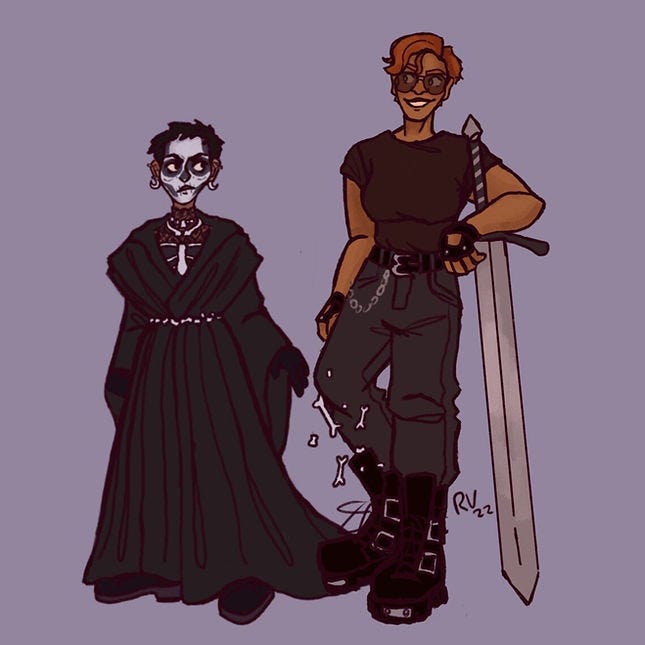
(I love searching for what feels like a niche topic and discovering someone’s already named the damn thing – in this case, stories like those above are apparently called queernorm, and include the likes of The Locked Tomb, Winter’s Orbit and The Left Hand of Darkness!)
Of course, the other type of representation is then more similar to our world, where queerness is definitionally different to the norm. These characters necessarily reflect the struggles countless real people have faced, in addition to being subversive in ways I’ll explore further in the following section.
A final note on representation: I find it frustrating how often queer characters (and real queer people) are oversexualized in media, and I appreciate stories which establish queerness without devolving into voyeurism. (Pluribus and Severance immediately come to mind for TV shows, and maybe Yellowjackets as well.) Also, the continued preponderance of the queer tragedy trope – good grief.
Theory & Praxis
I’m endlessly fascinated by the subversive nature of queerness, and the way discussion surrounding it necessarily involves moving beyond simple definitions and binaries and into richer veins of meaning.
It’s interesting to me that two similar authors I love can approach queer representation so wildly differently: Adrian Tchaikovsky casually including queer characters whenever possible, Brandon Sanderson putting so much thought into each one that it almost feels problematic.
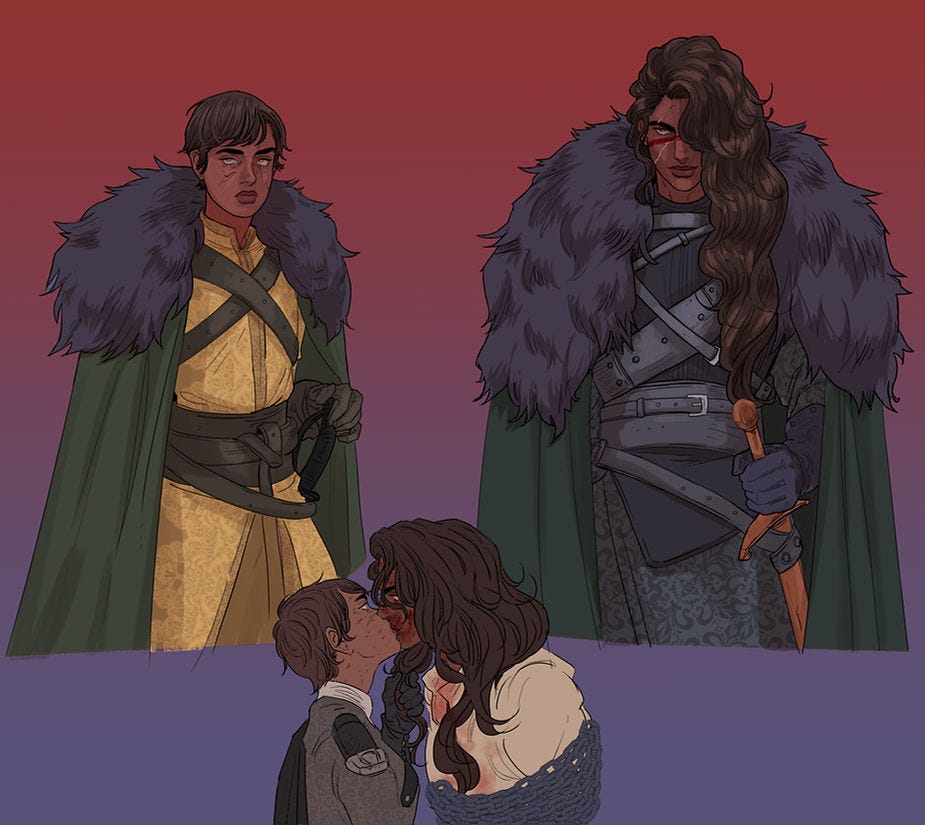
There’s a moment in The Masquerade I’ve discussed before, where protagonist Baru Cormorant identifies a sociobiological explanation for her lesbian nature, which also always comes to mind. I love seeing queer theory and ideas working alongside science and reason, where many in the world today refuse to see them as anything more than an oppositional binary. Lest we forget, the world we live in is infinitely complex.
Anyway. Not my longest or best piece, but hopefully you can take away a critical eye for queer representation in media. Is that character token, stereotypical, oversexualized, nuanced? Who’s behind that portrayal, and what’s it’s effect on the media it’s in?
I’d love to hear your thoughts! Thanks for reading and until next time <3